 JustMarkets
Also worth reading
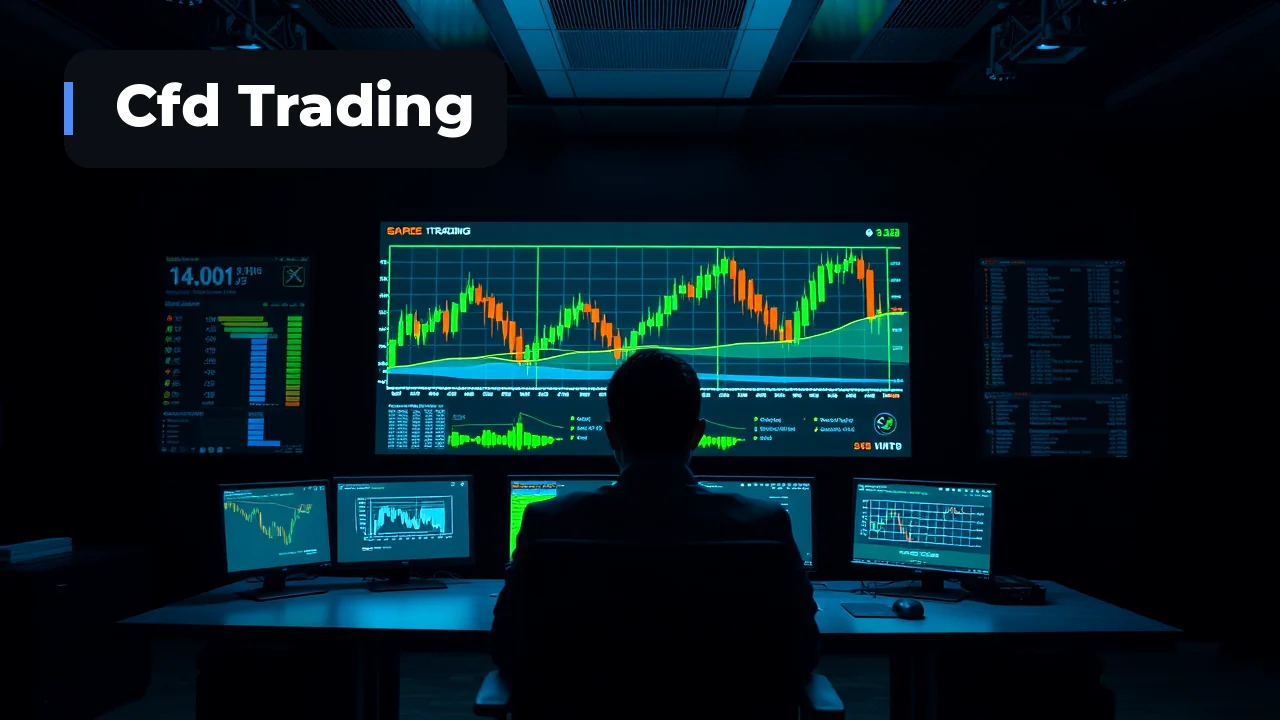
If you are new to online trading, this guide walks you through Contracts for Difference (CFDs) in plain language. A CFD is a financial contract between you and your broker where you exchange the difference in price of an asset from when you open the trade to when you close it. You do not own the underlying asset itself, you are simply speculating on whether its price will go up or down.
CFD trading is a popular starting point for many South Africans because it gives you access to global markets like forex, gold, and stock indices without needing to buy the physical assets. With JustMarkets, a broker founded in 2012 and rebranded in 2022, you can open an account from as little as USD 10 and trade on platforms like MetaTrader 4 (MT4) and MetaTrader 5 (MT5).
The First Steps Explained
The process starts with understanding what moves a CFD trade. When you open a CFD position, you are using leverage, which means the broker lends you money to increase your market exposure. For example, with 1:100 leverage, a USD 100 deposit lets you control a USD 10,000 position. This amplifies both profits and losses, so a small price move can have a big impact on your account balance.
In South Africa, there is no ESMA-style leverage cap like you see in Europe. The Financial Sector Conduct Authority (FSCA) regulates retail forex and CFD trading here, but it does not impose the same strict limits on leverage that European regulators do. Brokers, especially their offshore entities, can offer very high leverage ratios, so you must check what each broker offers and decide what you are comfortable with.
Before you open an account, you will need to complete Know Your Customer (KYC) checks under the Financial Intelligence Centre Act (FICA). This means providing your South African ID or passport plus proof of address, like a utility bill or bank statement, usually under three months old.
Breaking Down CFD Costs and Accounts
Costs are where beginners often get caught out. Every CFD broker makes money through spreads, commissions, and overnight fees. The spread is the difference between the buy and sell price of an asset, and it is how many brokers earn their income. Some accounts charge no commission but have wider spreads, while others use raw spreads with a separate commission per trade.
JustMarkets offers four account types: Standard, Cent, Pro, and Raw Spread. The Standard account fits most beginners because it has zero commission and spreads starting from around 1.0 pip for AUD/USD. The minimum deposit is USD 10, which keeps the entry point low. The Raw Spread account goes down to 0.0 pip but charges a commission per trade, which suits traders who prefer tighter spreads.
| Account Type | Minimum Deposit | Spread Model | Commission |
|---|---|---|---|
| Standard | USD 10 | From ~1.0 pip | 0 |
| Cent | USD 10 | From ~1.0 pip | 0 |
| Pro | USD 100-200 | Tight spreads | Variable |
| Raw Spread | USD 100-200 | From 0.0 pip | Yes, per trade |
Each account trades the same instruments: forex, metals, energies, indices, crypto CFDs, and stocks. The difference is in how the costs are structured.
Leverage and Margin Explained
Leverage is the single most misunderstood concept in CFD trading. Margin is the amount of money you need to keep in your account to hold a leveraged position open. If the market moves against you, the broker may ask for more margin or close your position automatically.
South African law does not cap retail leverage like the European regulatory framework does. Practically, this means you can see brokers offering leverage from 1:30 up to 1:3000, depending on whether you trade with a locally regulated entity or an offshore one. JustMarkets itself offers different leverage levels on different account types and instruments, so check the contract specifications before you trade.
With 1:100 leverage, the required margin for a USD 10,000 position is USD 100. A 1% adverse price move equals USD 100, which would wipe out your entire margin.
Regulation and Safety Checks
In South Africa, retail forex and CFD trading is legal and regulated. The conduct regulator is the FSCA, and any broker serving South African retail clients must be an authorised Financial Services Provider (FSP) under the FAIS Act. If a broker acts as a counterparty and issues CFDs, it also needs an OTC Derivative Provider (ODP) authorisation under the Financial Markets Act.
You can check this yourself for free. The FSCA publishes a public FSP register where you can search for any broker by name and confirm that the FSP number on the broker's website matches the register. You should also check the FSCA Media Releases page for public warnings about unauthorised or impersonator firms, as the regulator publishes updates on this list regularly.
Scam awareness matters in South Africa. The FSCA recorded about 1,247 forex scam complaints in 2023, with around R547 million lost and only about 12% recovered. The common patterns are social media recruitment promising guaranteed profits, advance-fee traps where you must "pay tax" to withdraw, and clone brokers that forge licences. Verify the FSP status before sending money.
Funding Your Account in ZAR
How you fund your CFD account affects your real costs more than the spread does. South African banks charge roughly 2-3% for converting ZAR to USD, and if you fund a USD account, you pay that conversion both on deposit and on withdrawal. Choosing a broker with a ZAR base account avoids this double conversion cost.
The dominant local funding method is Instant EFT through open-banking gateways like Ozow, Capitec Pay, and SiD. These deposits are usually instant and free. Local banks such as FNB, Absa, Standard Bank, Nedbank, and Capitec all support this. Withdrawals typically take 1-2 business days, while card payments clear in 2-5 days and international SWIFT wires take 3-5 days.
| Funding Method | Processing Time | Typical Cost |
|---|---|---|
| Instant EFT (Ozow, SiD) | Instant | Free |
| Bank Card | 2-5 days | Small card fee |
| SWIFT Wire | 3-5 days | Bank charges |
| ZAR Base Account | 1-2 days for withdrawal | No conversion fee |
South Africa also has exchange controls through the South African Reserve Bank (SARB). As a tax resident, you may send up to R1 million per calendar year offshore under the Single Discretionary Allowance without approval. This increases to R2 million from April 2026. You can also use the Foreign Investment Allowance for up to R10 million per year with a SARS tax clearance certificate. These allowances cover funding a foreign broker account.
Taking Profits Home and Taxes
South African residents are taxed on worldwide income, including profits from offshore brokers. The distinction that matters is whether your trading is considered income or capital gains.
Frequent or active forex trading is generally taxed by SARS as ordinary income at your marginal rate, which ranges from 18% to 45%. This is not treated as capital gains.
Active traders typically register for provisional tax, filing IRP6 returns at the end of August and February, plus a third top-up payment if you owe more. You also file the annual ITR12 return. Trading-related expenses, such as internet costs, data feeds, and education, may be deductible against your trading income.
``` Tax situation for an active SA trader:
- Trading profits = ordinary income at 18-45%
- Provisional tax returns: IRP6 end-Aug, end-Feb
- Annual return: ITR12
- Trading-related expenses may be deductible
```
Tax rates and brackets change every year, so verify the current numbers with SARS before you plan around them.
What a Demo Account Teaches
Before risking real money, use the JustMarkets demo account to practise. A demo account simulates live market conditions with virtual funds, so you can test strategies, learn how the platform works, and build the discipline of placing trades without financial pressure.
What a demo account will not teach you is the emotional side of real money. You will also see slippage, which is the difference between the price you expect and the price you actually get, behaving differently in live conditions.
JustMarkets offers a swap-free Islamic account option, which matters for traders who follow Shariah law and cannot earn or pay interest. If this applies to you, request the swap-free account during registration rather than after opening a standard account.
Choosing the Right Platform
JustMarkets provides MetaTrader 4 (MT4) and MetaTrader 5 (MT5), which are the industry standard platforms used by millions of traders worldwide. MT4 is the classic choice for forex, while MT5 adds more charting tools and supports a wider range of asset classes like stocks and commodities. Both are available on desktop, web, and mobile.
| Platform | Best For | Key Features |
|---|---|---|
| MT4 | Forex beginners | Simple charts, expert advisors |
| MT5 | Multi-asset traders | More timeframes, depth of market |
| Mobile App | On-the-go trading | Full trading, alerts, watchlists |
The mobile app works well for checking positions and closing trades, but avoid making impulsive trades from your phone when you are out and about.
What Most New Traders Miss
The biggest problem beginners face is not understanding costs, it is overestimating their own discipline. High leverage, fast-moving markets, and the ability to trade 24 hours a day create a perfect environment for impulsive decisions.
Another miss is ignoring the liquidation level of your account. Every CFD broker has a margin call level and a stop-out level. A margin call means the broker asks you to add more funds or close positions. A stop-out means the broker forcibly closes your losing trades to protect their own money. Knowing these levels for your account prevents unpleasant surprises.
South African traders should also note the best times to trade. The JSE equities session runs from 09:00 to 17:00 SAST. For forex, the highest liquidity window is the London-New York overlap, roughly 15:00 to 18:00 SAST. Trading during these windows usually means tighter spreads and less slippage.
When Walking Away Is the Right Call
CFD trading is not suitable for everyone. If you are using money you cannot afford to lose, if you expect to get rich quickly, or if you are not prepared to spend months learning before seeing consistent profits, then this market will likely be painful for you.
The honest reality is that a large portion of retail CFD traders lose money. The FSCA's own warning statistics reflect that. This is not because brokers are scam artists, it is because most people start with no education, too much leverage, and no risk management plan.
If you are the kind of person who wants to learn, who can practise on a demo account for weeks, and who follows a written trading plan rather than emotion, then CFD trading with a properly regulated international broker is a legitimate path.


Questions
How much money do I need to start trading CFDs?
With JustMarkets, you can start with USD 10 on the Standard or Cent account. This keeps the entry point low for beginners who want to test the waters without committing a large amount of capital.
Is CFD trading legal in South Africa?
Yes, retail forex and CFD trading is legal and regulated in South Africa. The FSCA is the conduct regulator, and any broker serving SA clients must be an authorised Financial Services Provider under the FAIS Act with an OTC Derivative Provider authorisation if they issue CFDs.
How is my CFD trading profit taxed in South Africa?
SARS taxes residents on worldwide income. Frequent or active trading is generally taxed as ordinary income at your marginal rate of 18% to 45%, not as capital gains. Active traders typically register for provisional tax and file IRP6 returns.